Why is it important to measure a room? Quite simply: accurately measuring a room is essential to ensuring that everything you want to do in it will actually fit. Whether you're positioning furniture, installing new flooring, or planning a renovation, measuring the room is the foundation for these projects.
Another important aspect when measuring a room is space optimization. By carefully measuring, you can determine how to best utilize the available space. You'll be able to more easily see where you might need to add additional storage or how to best arrange furniture to maximize the available space.
Beyond space optimization, budgeting also plays a crucial role. By measuring the room, you'll have a precise idea of the materials you'll need for your renovation or remodeling projects. This will help you better estimate costs and potentially save money by purchasing the right amount of materials.
Basic tools for measuring a room
Before we get into the step-by-step instructions, let's take a look at the most important tools you'll need to measure a room.
To properly measure a room, you'll need various tools that allow you to take precise measurements. Besides the tape measure and folding rule, there are other useful tools that can help you with this task.
Tape measure and folding rule
A tape measure and ruler are the most basic tools for measuring a room. You can use them to measure the length, width, and height of a room. They are easy to use and available in various lengths. Make sure you use a high-quality tape measure or ruler to get accurate measurements.
When using a tape measure, it's important to hold the ends firmly to get accurate measurements. You should also make sure to keep the tape measure straight to avoid distortion. A folding tape measure, on the other hand, is especially handy when measuring small distances or angles.
Laser rangefinder
If you want to be even more precise, you can use a laser rangefinder. This tool measures the distance between different points in space using a laser. It's especially useful if you want to measure large rooms or unusual room shapes.
The laser rangefinder works by emitting a laser beam that is reflected by objects in the room. The device then measures the time it takes for the laser beam to return to the measuring device and calculates the distance based on this. This allows for highly precise measurements, even over longer distances.
A laser rangefinder is especially useful if, for example, you need the exact dimensions of a room to design furniture, sofas , or remodel. It saves time and provides accurate results without having to repeatedly lay out and apply the tape measure.
Step-by-step instructions for measuring a room
Now we get to the actual instructions for measuring a room. Simply follow these steps to get accurate results.
Preparing for measurement
Before you begin measuring, clear the space as much as possible. Remove furniture, curtains, or other objects that might get in the way. This makes the measurement easier and ensures accurate results.
It's also important to clean the floor to ensure that dust or dirt particles don't affect the measurement results. Use a broom or vacuum cleaner to thoroughly clean the floor.
It's also recommended to open windows to ensure adequate ventilation. This not only improves working conditions but also allows for more accurate measurements since there are no air blockages.
Measure the length and width
Start by measuring the length and width of the room. Take a tape measure or ruler and start on one wall. Keep the tape measure straight and extend it to the opposite wall. Record the result. Repeat the process on the other two walls. Add all three measurements together to get the total length of the room. Repeat the process for the width.
It's important to hold the tape measure or ruler firmly to ensure accurate measurements. Make sure the measuring tool doesn't slip and the measurement isn't distorted.
If the room has irregular shapes or corners, it's recommended to take additional measurements to ensure all areas are covered. It's best to use a flexible tape measure to accommodate the room's contours.
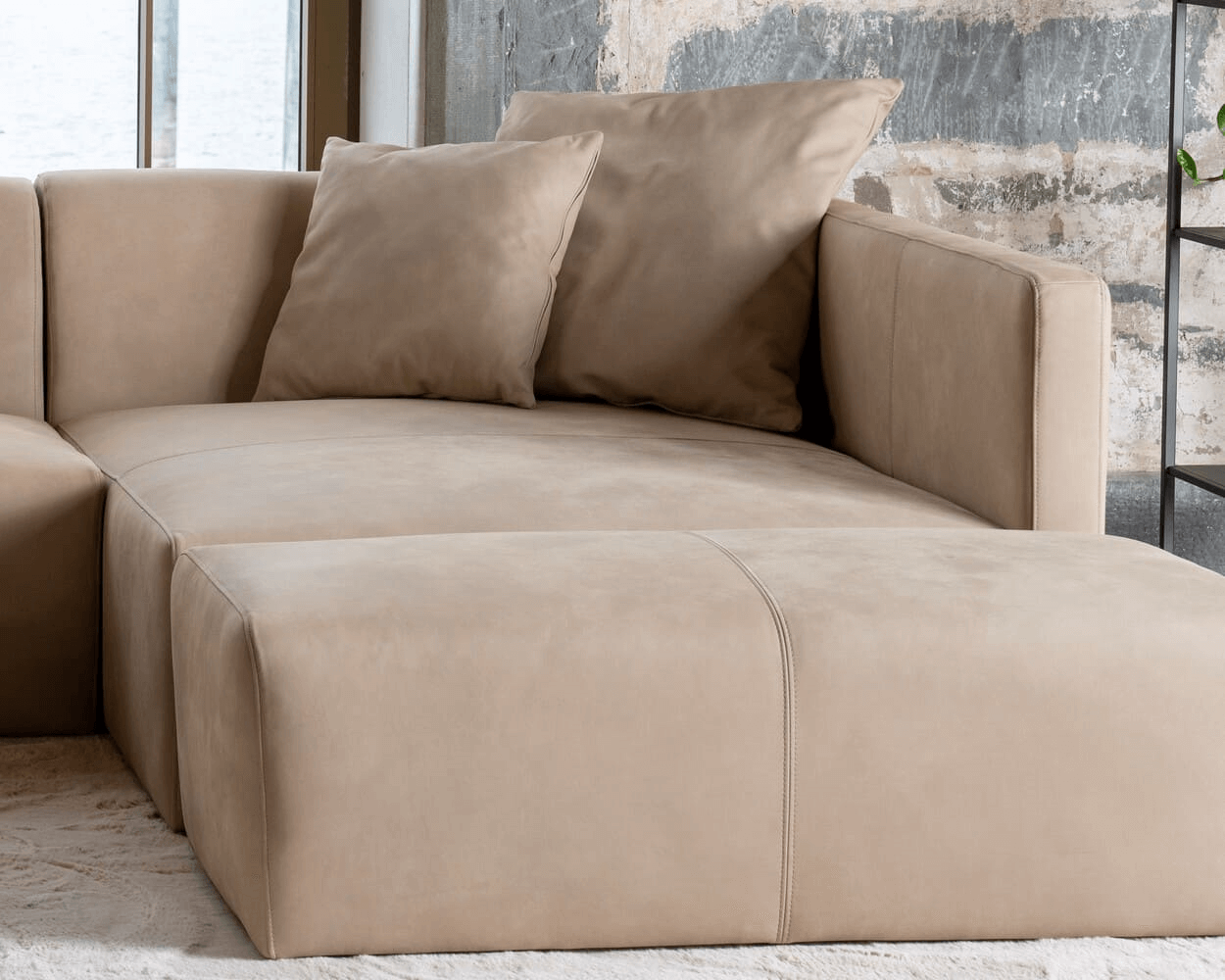
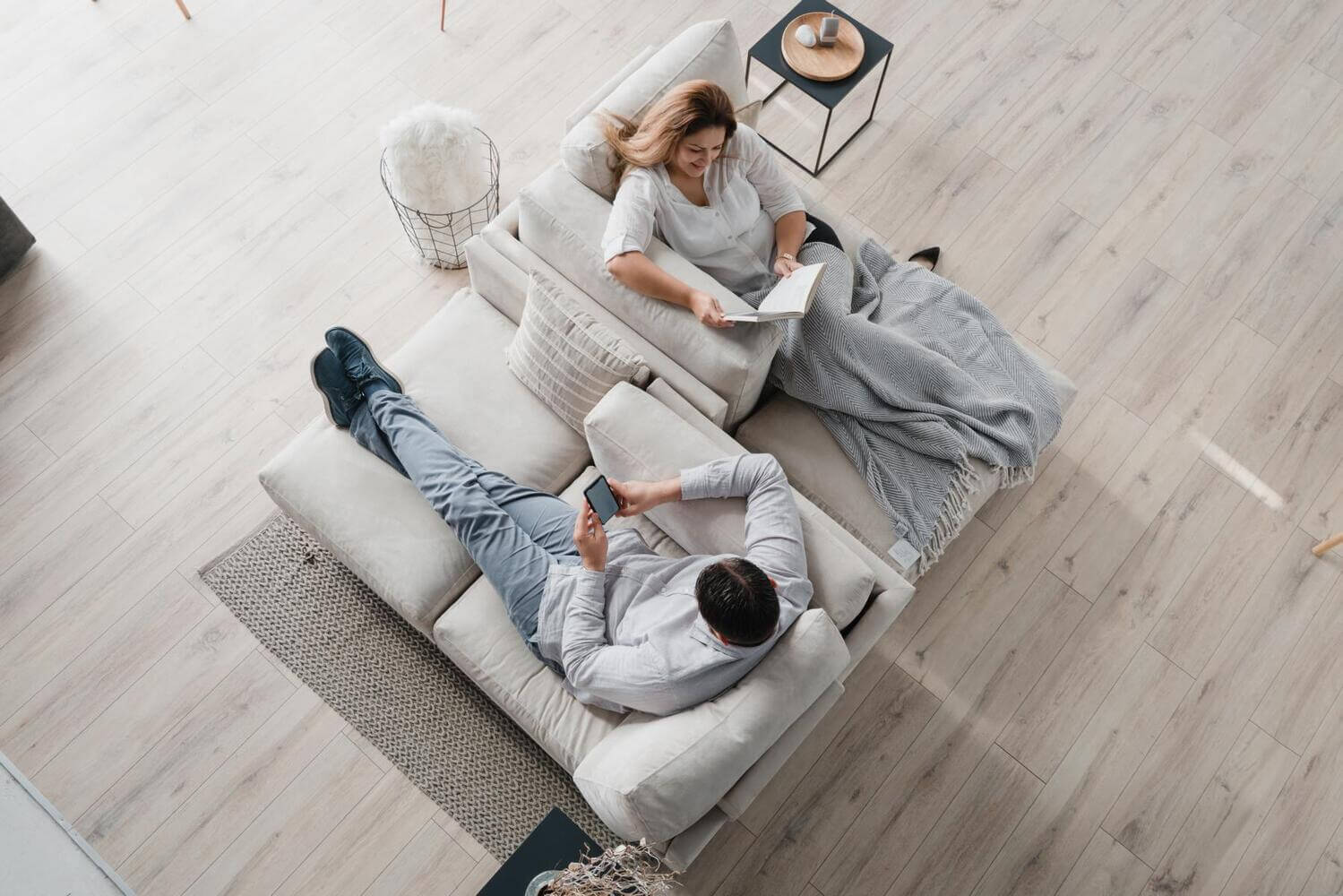
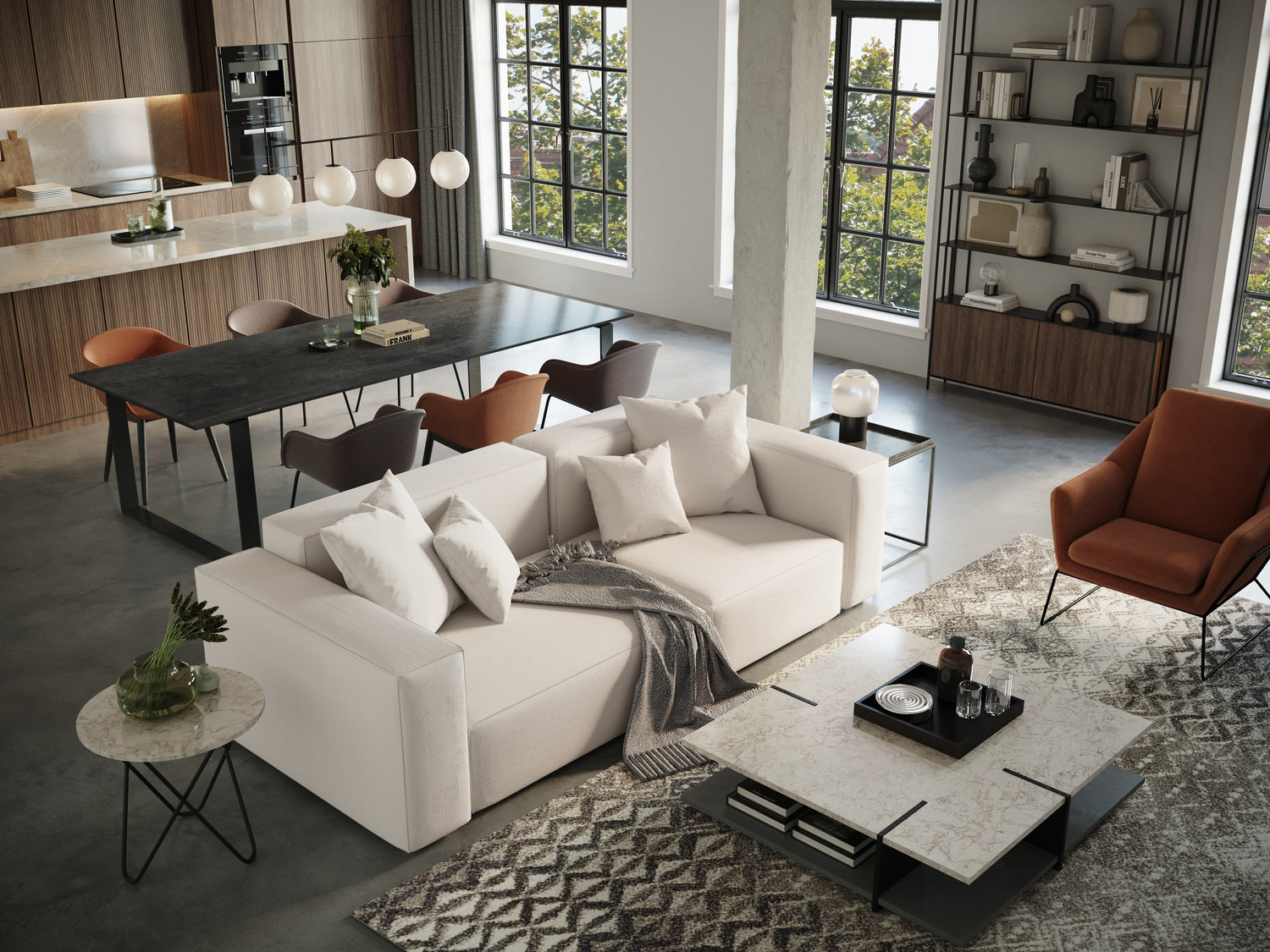
Discover the world of modular sofas! No matter how large your living room, you'll find the perfect solution here:
Measure the height
Now it's time to determine the height of the room. Use a tape measure or ruler to measure the distance from floor to ceiling. Repeat the process at different points in the room to ensure the ceiling height is the same everywhere.
It may be helpful to use a ladder or stool to reach higher ground. However, always be mindful of your safety and follow applicable safety regulations.
If the room has sloping or sloped walls, measure the height at various points along the wall to determine the exact height. Record all the measurements to calculate the average height later.
Calculating square meters
To calculate the room's square footage, simply multiply the length by the width. The result gives you the room's area in square meters. This information is especially useful if you're looking to purchase flooring or paint.
It's recommended to round up your measurements to ensure you have enough material for the room. Also consider waste and potential errors during installation.
If the room has irregular shapes or angles, divide it into smaller areas and calculate the square footage for each area separately. Then add all the partial areas together to get the total area of the room.

Tips and tricks for accurate measurements
When measuring a room, you may also encounter rooms with unusual shapes. Here are some tips and tricks for getting accurate measurement results.
Handling irregular spatial shapes
If your room is irregularly shaped, you may need to take multiple measurements to get accurate results. Take measurements at several points in the room and average them to get a precise idea of the room's dimensions.
It can also be helpful to draw the irregular shapes of the room. Draw the floor plan of the room on graph paper and mark the various measurement points. This gives you a visual representation of the room and allows you to better understand the measurements.
Another tip is to divide irregular shapes into geometric ones. For example, if you have a room with a slanted wall, you can think of that slanted wall as a triangle. Then calculate the area of the triangle to more precisely determine the size of the room.
Avoid errors when measuring
To avoid errors when measuring, you should keep the tape measure or ruler as straight as possible. Also, make sure it isn't twisted or bent. This ensures accurate measurement results and avoids unnecessary errors.
Another mistake to avoid is overlooking small details. Be sure to also consider the width of doors, windows, or other elements in the room. These details can affect the room's dimensions and should therefore be taken into account when measuring.
It can also be helpful to ask a second person for assistance. Another person can hold the tape measure or help with difficult measurements. This helps ensure accurate and reliable measurements.
Application of measurement results
After measuring the room, you can now use the measurement results in various ways.
Precise measurements offer numerous options for optimally utilizing and designing space.
Room design and furniture selection
The measurement results allow you to accurately plan the room and choose the right furniture. You can ensure that the furniture is the right size and fits well in the room. Use the measurements to create a scaled room plan and place the furniture on paper to try out different arrangements.
A well-designed room creates a pleasant atmosphere and optimal use of available space. You can design the space according to your individual needs and preferences.
Renovation and conversion projects
For larger renovation or remodeling projects, accurate measurements are essential. You can precisely calculate materials like flooring, paint, or wallpaper and ensure you purchase the right amount. This helps you save costs and avoid unnecessary waste.
Accurate measurements also help you plan electrical systems, such as the placement of outlets and switches. You can pinpoint their locations and ensure they meet your needs.
Additionally, the measurement results allow you to accurately plan sanitary facilities, such as the placement of sinks, toilets, and showers. You can use the exact dimensions to determine the optimal layout of the restrooms and ensure efficient use of available space.
Measurements also play an important role in designing lighting systems. You can determine the exact distances and positions of the lights to achieve uniform illumination of the room and create a pleasant atmosphere.
Frequently asked questions about measuring rooms
Here are some frequently asked questions about measuring space:
How do I measure sloped ceilings?
When measuring sloped ceilings, you need to measure the length of the slope. Start from the lowest point of the slope and hold the tape measure straight along the slope. Measure the length up to the highest point of the slope. Repeat the procedure at different points along the slope to obtain accurate measurements.
To calculate the roof slope area, multiply the length of the slope by the width of the room. This gives you the base area of the slope. To convert the slope area to square meters, divide the result by 100.
Remember that sloping ceilings can affect the layout of the room. Keep this in mind when choosing furniture and designing the room.
What to do if the room is not square or rectangular?
If the room has an unusual shape, it's helpful to divide it into several geometric shapes and measure them individually. Then calculate the area of each shape and add them together to get the total area of the room.
An example of an unusual room shape is an L-shaped room. Divide the room into two rectangular areas and measure each individually. Add the areas of the two areas to get the total area of the room.
It can also be helpful to divide the room into several small areas and measure each one individually. This gives you more detailed information about the room's area, which you can then take into account when planning.
With these simple steps and a few basic tools, you too can successfully measure a room. Be precise, follow our tips and tricks, and use your measurement results for optimal room planning. Good luck with your future projects!