The sofa is the central element that draws attention in most living rooms. It's not just a piece of furniture, but a place to relax and entertain. The right sofa color significantly contributes to making you feel comfortable in your living room. However, deciding on a specific color can be difficult as there are so many factors to consider. In this guide, you'll learn how to choose the right sofa color.
Why is the right sofa color important?
Choosing the right color for your sofa plays an important role in the overall design of your living room. The right color can influence the overall feel of the room and express your personal style. The sofa's durability and ease of maintenance are also crucial, and this depends on the color choice.

Influence on the spatial effect
The color of the sofa can significantly influence the overall feel of a room. Dark colors like brown, navy blue, or anthracite look elegant and give the room a warm, welcoming feel. Light colors like cream, white, or beige make the room appear larger and airier, creating a fresh, inviting atmosphere. The following also applies here: the lighter the color, the more susceptible the sofa is to dirt and stains.
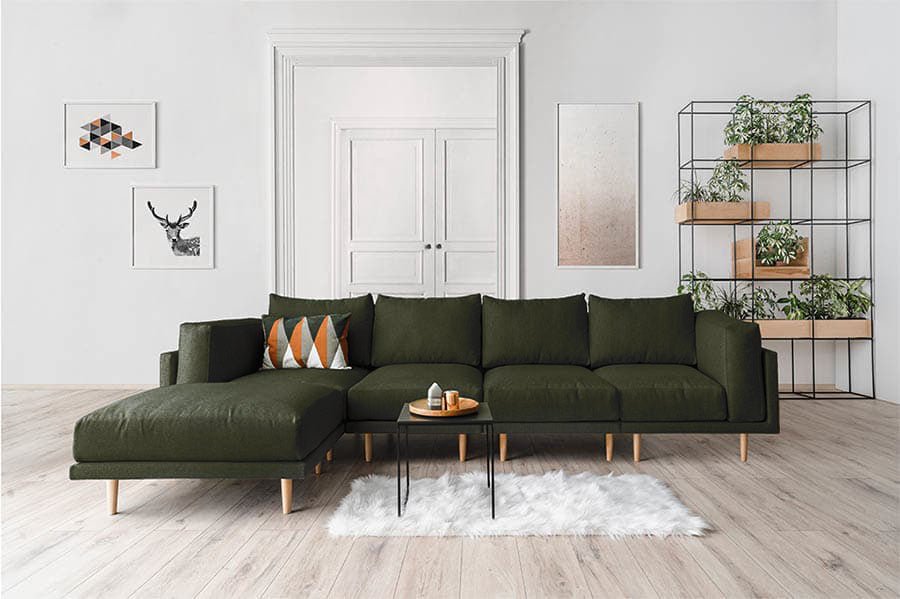
However, if you choose a dark color, you should make sure the room is sufficiently lit, otherwise it could quickly look gloomy. One way to avoid this is to use bright accents like pillows or blankets on the modular sofa .
Personal style and taste
The color choice for your sofa should also reflect your personal style and taste. If you prefer a minimalist interior design style, choose a neutral color like gray or white. If you like bright and colorful things, vibrant colors like red or blue are a good choice. If you're unsure which color best suits your style and taste, ask a professional for advice. For advice, we recommend visiting a Livom showroom near you. You can test and compare different sofa styles, models, fabric types, and colors on site.
It's also important to remember that the sofa should not only fit in with the room, but also match the other furniture and decorations. If the room already features certain colors and patterns, you should choose a sofa color that complements these elements and harmoniously completes the overall look.
Longevity and ease of care
The longevity and ease of maintenance of your sofa also depends on your choice of color. If you have small children or pets, dark colors are recommended because they hide dirt and wear better. Light colors are more delicate and require more care and cleaning.
However, there are also special fabrics that repel dirt and are easy to clean, regardless of the color of the sofa. If you choose for a fabric of this type, you can choose a lighter color without having to worry of stains and dirt.
Regardless of the color you choose, you should also pay attention to the quality of the sofa. A high-quality sofa lasts longer and is more resistant to dirt and wear. Therefore, it's best to invest in a high-quality sofa that suits your needs and your lifestyle. style.
Factors to consider when choosing the color of the sofa
There are many factors to consider when choosing a sofa color. Here are the most important:
Room size and lighting conditions
The size of the room and the lighting conditions play an important role in choosing the color of the sofa. Choosing the right color for the sofa can help make the room appear larger or brighter. If your living room is small and dark, it's best to choose light colors like white or cream to visually enlarge and brighten the room. In large, bright rooms, however, dark colors like anthracite or navy blue can create a cozy atmosphere.
However, it's important to note that the color of the sofa isn't the only factor that determines whether a room visually expands or decreases in size. The placement of the sofa and the choice of other furnishings can also play a role.
Color concept of the living room
The color choice for the sofa should match the living room's color scheme. If the rest of the room's furnishings are neutral, the sofa can serve as a colorful accent. For example, you can use bright colors like red or yellow to create a special accent. If the room already features colorful walls or decor, the sofa's color should be more subtle. Soft colors like beige or gray are ideal.
Material and structure of the sofa
The choice of sofa color also depends on its material and structure. Leather or cotton upholstery pairs best with dark colors, while light colors are more suitable for velvet or linen upholstery. The texture of the sofa can also play a role. For example, velvet covers in dark colors can create a particularly luxurious look.
If you use your sofa frequently, you should also make sure to choose a color that will look good even after frequent use. For example, darker colors are ideal in this case, as they can hide dirt better.
Pets and children
If If you have pets or children, you should Pay particular attention when choosing the color of your sofa. Dark colors are ideal because they hide dirt better. Easy-care materials like leather or microfiber are also recommended. If you still want to opt for a lighter color, make sure the cover is easy to clean and, if necessary, removable.
Ultimately, when choosing the color of the sofa, you should pay special attention to your Personal tastes. Ultimately, the sofa should not only be functional, but also visually appealing.
Summary
When choosing a sofa color, you should primarily consider the size of the room, the living room's color scheme, the sofa's material and structure, and your pets and children. Ultimately, though, you should pay special attention to your personal taste to choose a sofa that's not only functional but also visually appealing.
Popular color options and their effect
Here are some popular sofa color options and their impact:
Neutral colors
Neutral colors like gray, beige, or white are timeless and adapt to almost any decor style. They make a room feel larger and more airy and can serve as a colorful accent.
If you choose a gray sofa, you can Pair it with colorful pillows and a brightly colored rug to bring the room to life. A beige sofa, on the other hand, pairs well with a minimalist interior style and can be paired with wooden furniture and plants to create a warm atmosphere. A white sofa looks particularly elegant and can be paired with gold or silver accents to add a touch of luxury.
Earth tones
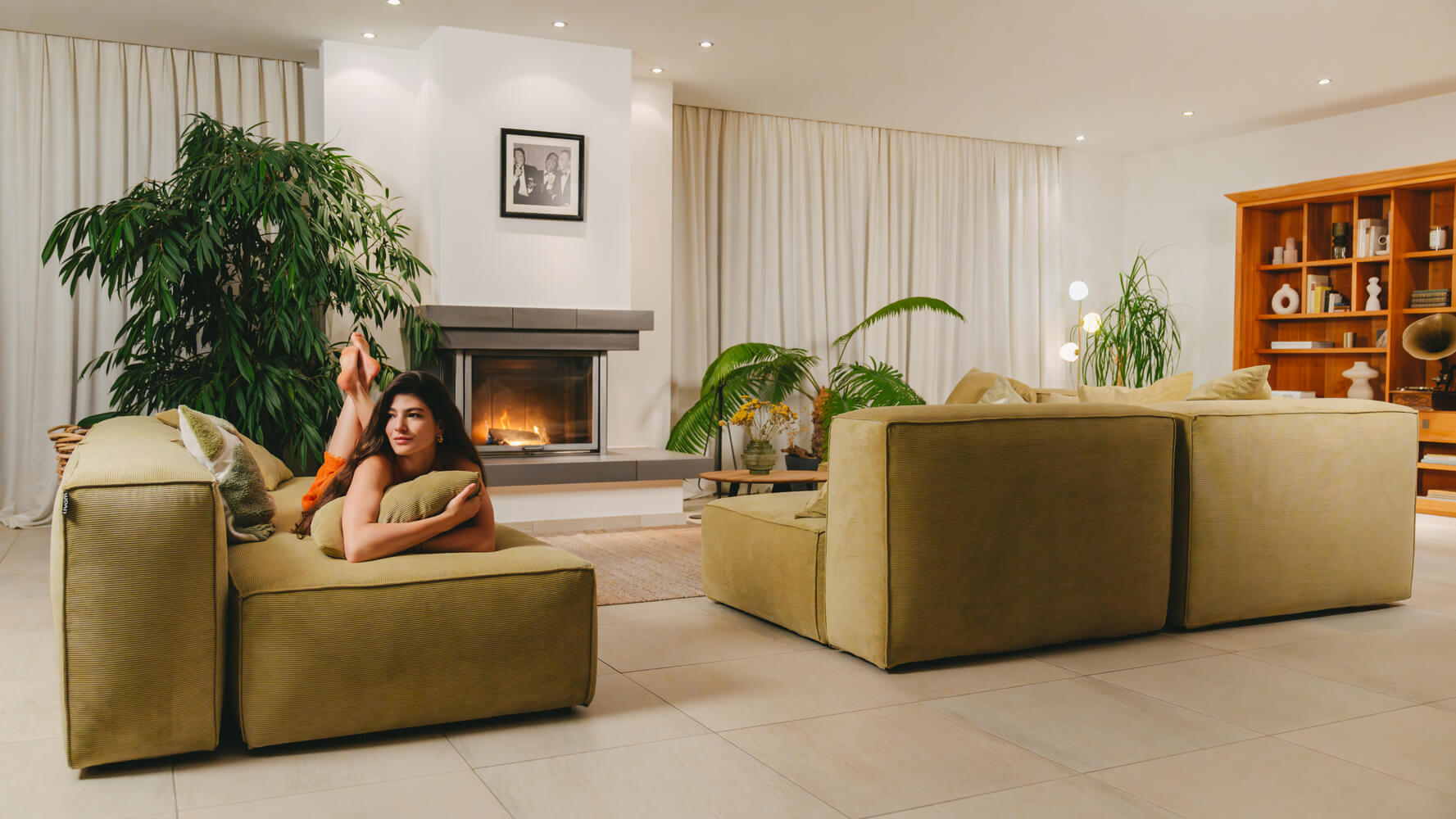
Earthy tones like brown or ochre bring warmth and intimacy to a room. They pair well with natural materials like wood or stone and are recommended if you prefer a rustic atmosphere.
A brown leather sofa is a classic and goes well with a rustic style. Pair it with it. Plaid pillows and a wool blanket create a cozy atmosphere. An ochre sofa, on the other hand, can be paired with green plants and gold accents for a touch of elegance.
Strong and bright colors
Bold, bright colors like red, blue, or green draw attention to a room and lend it dynamism and a joie de vivre. They work well as a pop of color in an otherwise neutral room.
A red sofa can be paired with white walls and black furniture to create a modern look. A blue sofa, on the other hand, pairs well with a maritime-themed interior and can be decorated with shells and starfish. A green sofa has a particularly fresh look and can be paired with white furniture and plants to create a natural look.

Pastel colors
Pastel colors like pink, light blue, or mint green are soft and calming. They pair well with a romantic or playful interior style.
A pink sofa can be paired with white furniture and gold accents to create a feminine look. A light blue sofa, on the other hand, pairs well with a Scandinavian interior style and can be paired with gray accessories. A mint green sofa looks particularly cheerful and can be paired with colorful pillows and a colorful blanket for a playful look.
Tips for matching sofa colors with other furniture and decorations
Here are some tips on how to match your sofa's color with other furniture and decorations. Test :
Harmony and contrast of colors
To achieve a harmonious color scheme, it's best to choose colors from the same color family. If you prefer high contrast, it's best to combine colors opposite on the color wheel.
For example, if you have a blue sofa, you can pair it with other shades of blue like turquoise or light blue to create a harmonious color scheme. However, if you want to create a contrast, you can pair the blue sofa with a yellow rug or pillow.
Highlighted colors and accessories
To highlight the sofa, you can Pair it with accent colors and coordinating accessories like pillows, rugs, or curtains. Choose colors that complement the sofa's color scheme.
For example, if you have a gray sofa, you can pair it with yellow or red accents to make it the focal point of the room. A matching rug or curtains in the same color family can also complete the overall look.
Models and prints
Patterns and prints can make a sofa more interesting and lively. But it's best to pair just one patterned element in the room and keep the rest of the decor simple and understated.
For example, if you have a patterned sofa, you might Pair it with simple decorative pillows and a simple rug to highlight the sofa. A suitable piece of wall art can also complete the overall look.
There are many ways to combine a sofa with other furniture and decorations. It's important that the colors and patterns harmonize well with each other and that the overall look is harmonious.
Conclusion
The right sofa color is an important factor in the success of a living room design. When choosing a color, consider: your Personal preferences and the room's decor style. Pay attention to the ease of care and durability of the material, and combine the sofa's color with other furniture and decorations in a harmonious and interesting way.
For example, if you have a modern living room, you could achieve an elegant and timeless look with a gray sofa. Combine it with a rug in similar shades of gray and add a touch of class. colorful cushions or a colorful painting on the wall.
A brown leather sofa, on the other hand, gives your living room a warm and welcoming feel. Pair it with a rustic wooden table and a cozy, earth-toned rug. Add a few houseplants to create a natural, relaxing atmosphere.
If you are a fan of bright colors, you can Choose a red or blue sofa. These colors bring life to the room and can be combined with neutrals like white, gray, or black. For example, a red sofa looks great in a room with white walls and black furniture. Use some cushions in similar red shades to make the sofa stand out even more.
In short, choosing the color of your sofa plays an important role in designing your living room. Consider your Personal preferences, the room's furnishing style, and how it matches other furniture and decorations. With the right sofa color, you can make a room welcoming, elegant or modern and create an inviting atmosphere.